From Prompt to Production: Inside Modern AI Music Creation
AI Music has moved from novelty to practical studio partner, turning text, reference audio, or even a hummed melody into polished tracks. Under the hood, today’s systems blend transformers, diffusion models, and audio codecs to translate creative intent into waveform reality. A typical pipeline begins with semantic understanding: the model parses a prompt like “uplifting synthwave at 110 BPM with punchy drums and warm analog bass,” building a rich embedding of genre, mood, tempo, timbre, and structure cues. That intent then conditions a generator that crafts either a spectrogram or discrete tokens, ultimately decoding into high-fidelity audio.
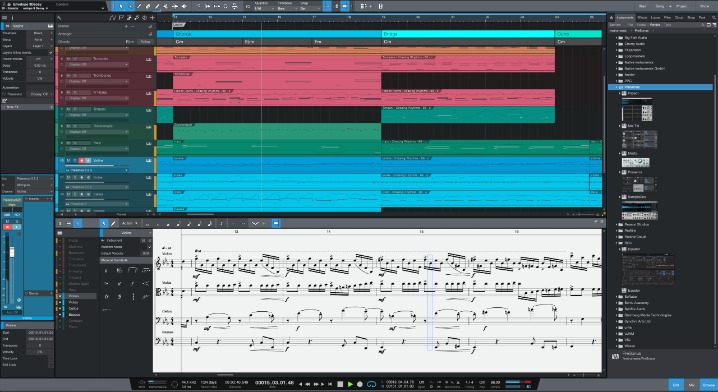
Structure matters as much as sound. Instead of spitting out shapeless loops, advanced engines learn arrangement patterns—intro, build, drop, breakdown, outro—so tracks breathe and evolve. Conditioning signals can include key, chord progressions, instrument tokens, or a short reference clip that captures texture and groove without copying melody. With stem-aware architectures, the system can render drums, bass, pads, and leads separately, enabling hands-on mixing, sidechain dynamics, and post-processing that mirror professional workflows.
This process empowers creators to iterate fast. Adjust a few words to change the energy curve, swap an instrument family, or nudge BPM and swing until the pocket feels right. For teams shipping at scale, platforms like AI Music Generator compress hours of sound design into minutes, yet leave room for taste: EQ touches, saturation, stereo imaging, and bus compression still shape the final print. Safety layers help, too. Offensive content filters, IP-aware style guards, and timbre-neutral transformations aim to reduce unwanted mimicry.
Finishing is where tracks become release-ready. Loudness normalization aligns to platform targets, while multi-band compression tames peaks that diffuse or transformer engines can exaggerate. Smart de-essers smooth harsh cymbals and vocal-like artifacts; adaptive reverbs carve coherent space; transient shapers restore punch lost in decoding. With dialog ducking or sidechain send automation, instrument balance adapts to scene changes in trailers or gameplay. In short, Music Generator AI does the heavy lifting, while human ears direct the last 10% that separates “good” from unforgettable.
Use Cases That Deliver: Background Scores, Ads, Games, and Royalty-Free Pipelines
Production teams increasingly turn to AI Background Music Generator tools to fuel content lifecycles. A creator shooting weekly shorts needs cohesive vibes across dozens of clips; a dynamic soundtrack that loops cleanly at multiple lengths prevents audible seams; a marketing squad wants three on-brand variations for A/B tests, each with subtly different hooks. An AI Music Maker solves these problems by generating consistent palettes of tempo, timbre, and motif, then exporting stems for agile editing.
Consider a channel that publishes tech explainers. Audience retention jumps when intros share a recognizable sonic identity: crisp arps, gentle sidechain, mid-tempo pulse. Instead of hunting stock libraries, the team establishes a style card—keywords, BPM, instrumentation, energy curve—and spins up dozens of tracks in minutes. Because the output is licensed as Royalty-Free AI Music, there’s no scramble over cue sheets or per-territory restrictions. The channel can monetize across regions without surprise claims.
Interactive media multiplies the payoff. A small game studio prototypes adaptive scoring: as enemies approach, percussion layers intensify; when players enter a safe area, pads bloom and percussion retreats. With AI Song Maker workflows, the team renders stems and uses middleware to crossfade between states, avoiding hard cuts that break immersion. The result is a soundtrack that responds to play without ballooning the audio budget.
Advertising and brand work benefit from on-demand variation. One automotive spot needs a confident, modern groove; another flavor needs warmer analog harmonies for a nostalgic cut. Spinning six mixes from a common motif allows rapid testing across audience segments. In practice, the time savings compound: hours not spent digging through libraries are invested in storytelling and visual polish. For podcasts, custom AI Song Generator stingers keep segments distinct and memorable, while the master bus chain—gentle glue compression, subtractive EQ around dialogue fundamentals—ensures speech remains intelligible.
Operations matter as much as inspiration. Tagging generated cues with mood, key, tempo, and recommended use-case saves headaches at scale. Batch exports with naming conventions—Project_Spot_Take03_110bpm_Amin—keep teams organized. Most importantly, a clear license summary paired with project logs confirms who prompted what, when, and how it’s cleared. Combined, these practices turn AI Music Creation from a quick win into a reliable backbone for content calendars.
Quality, Ethics, and Authenticity: Building Trust in AI Audio
As tools become more capable, trust becomes a differentiator. Quality begins with data: consenting, diverse training material reduces bias and avoids gray areas in style emulation. Guardrails that prevent cloning of living artists’ voices or signature productions support fair play while still enabling genre fluency. A good rule of thumb is intent plus distance—describe the emotional and sonic qualities sought, not the identity of the creator to be imitated. Many platforms embed policy-aware filters to enforce this boundary.
Authenticity then extends beyond composition into verification. Watermarking, audio hashing, and content authenticity frameworks (such as C2PA) help downstream platforms understand provenance. Complementary detection systems strengthen the broader media ecosystem. An AI image detector, for example, can analyze uploaded visuals and determine whether they are AI generated or human created by extracting multi-scale features, comparing noise residuals, and evaluating frequency-domain artifacts; the process runs from ingestion to feature extraction, classification with ensemble models, and calibrated confidence scoring. These approaches inspire parallel strategies for audio—detecting synthesized artifacts in high-frequency bands, validating embedded watermarks, and auditing metadata trails.
Responsible deployment also means clarity in rights. Royalty-Free AI Music typically grants perpetual use across platforms, but specifics vary: broadcast vs. web, derivative works, exclusivity windows. Maintaining prompt logs, model versions, and output hashes protects teams if questions arise. Where vocals or text-to-speech are involved, document consent for any distinctive voice models and avoid celebrity soundalikes. When in doubt, choose neutral timbres and generic stylistic signposts to ensure originality.
On the craft side, rigorous finishing elevates credibility. Match streaming loudness targets (often around −14 LUFS for many platforms) to preserve dynamics. Use dynamic EQ to control buildup around 200–400 Hz in dense mixes and soften 2–5 kHz where cymbals and sibilance can grate. Parallel compression restores punch for drums that diffusion decoders may slightly blur, while tasteful saturation adds harmonic glue without smearing transients. Automated ducking keeps narration on top without pumping, and linear-phase filters maintain phase integrity in wide stereo beds.
Finally, align aesthetics with purpose. Corporate explainers favor unobtrusive midrange clarity; cinematic teasers want wide stereo fields and powerful low-end translation; casual vlogs benefit from lighter, lo-fi textures that leave room for room tone. Choosing the right generator settings—BPM, instrument emphasis, motif density—makes that match repeatable. With the right balance of safety, craft, and documentation, AI Music systems transform pipelines without compromising ethics or audience trust, enabling creators to Generate Music with AI that feels original, polished, and ready for prime time.